The Way of Kings
One of my friends is a voracious reader. When he learned I did my undergrad at Brigham Young University (BYU), he asked me if I'd read anything by Brandon Sanderson, who teaches at BYU. I hadn't. He said I should, and so I did. I picked up a copy of The Way of Kings (2010) on Boxing Day last year and finished it today.
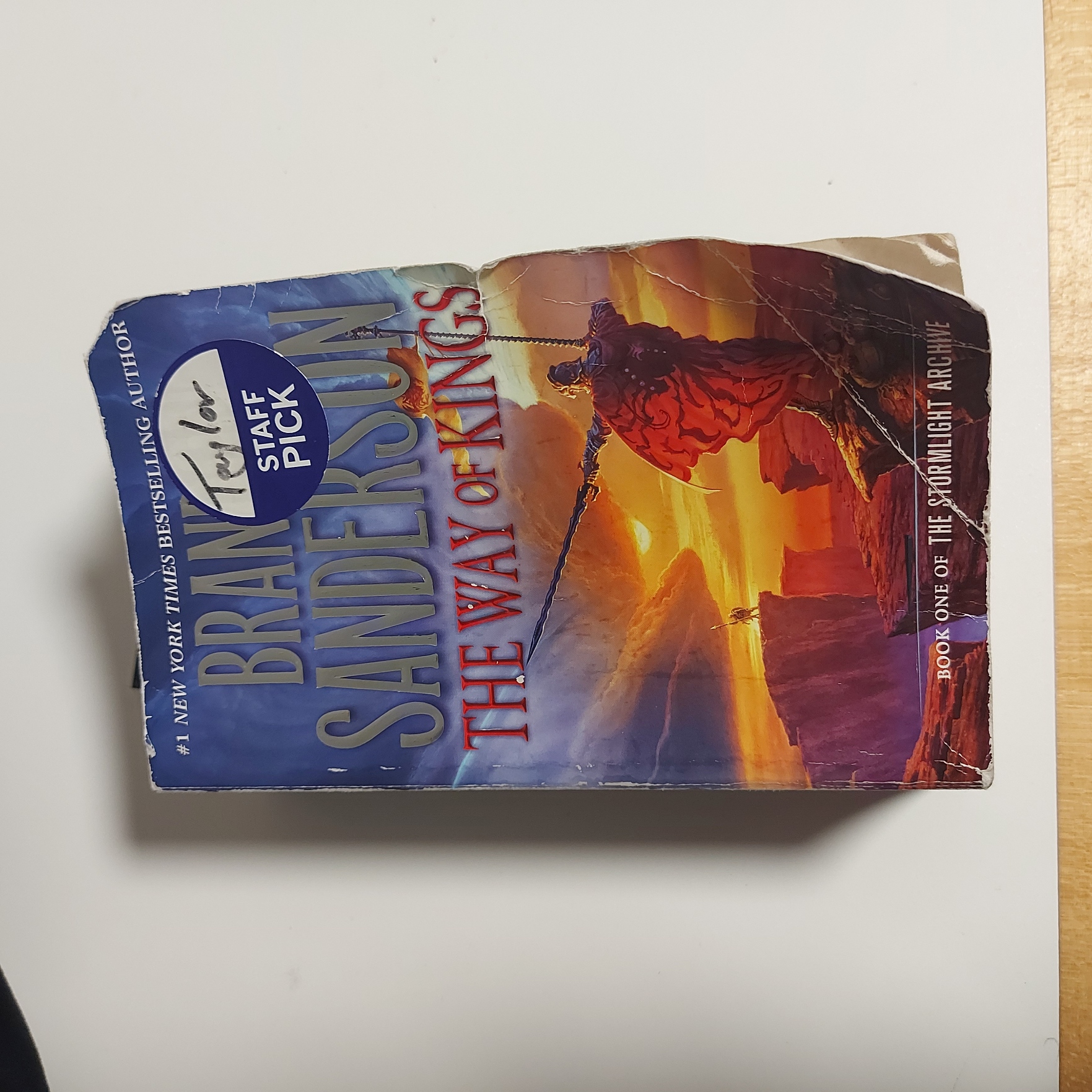
Yes, it's taken me over three months to finish the book. What can I say, I'm a slow reader. But in my defence, the book is almost 1,300 pages long.
The Way of Kings wasn't easy at first. Not because the writing is dense or complicated. Not at all, actually. The writing is wonderfully to the point. Just how I like it. But for the first few hundred pages, you're jumping from story to story, character to character, timeline to timeline without feeling that these things connect in any meaningful way. It's a little dizzying.
"Trust the process," I said to myself. Enjoy the ride. Sanderson isn't in a rush to tell the story, so why should I be in a rush to read it? "Journey before destination" is the book's self-stated theme. How apt.
Once I settled into the book's rhythm, it was a great read. Four main story lines happen in parallel. There's a slave trying to overcome despair. A ruler whose idealism is costing him dearly. A young scholar hiding ulterior motives. And a superhuman assassin without free will.
The fifth protagonist is the world itself. Sanderson is a master at worldbuilding. And the cool thing about the enormous word count is that by the end of the book, you feel like you really know the world. I've spent so much time seeing the Shattered Plains with my mind's eye that I genuinely feel like I've been there.
Things come to a head in the last 20% of the book. The parallel stories collide, we reach a well-earned climax, we find answers to longstanding questions, and there are multiple plot twists.
Is the end exciting enough to justify the thousand pages before it? The answer: "Journey before destination."