Desire paths
Desire paths are shortcuts in the dirt that people take because they're quicker to go through than an already designated path.
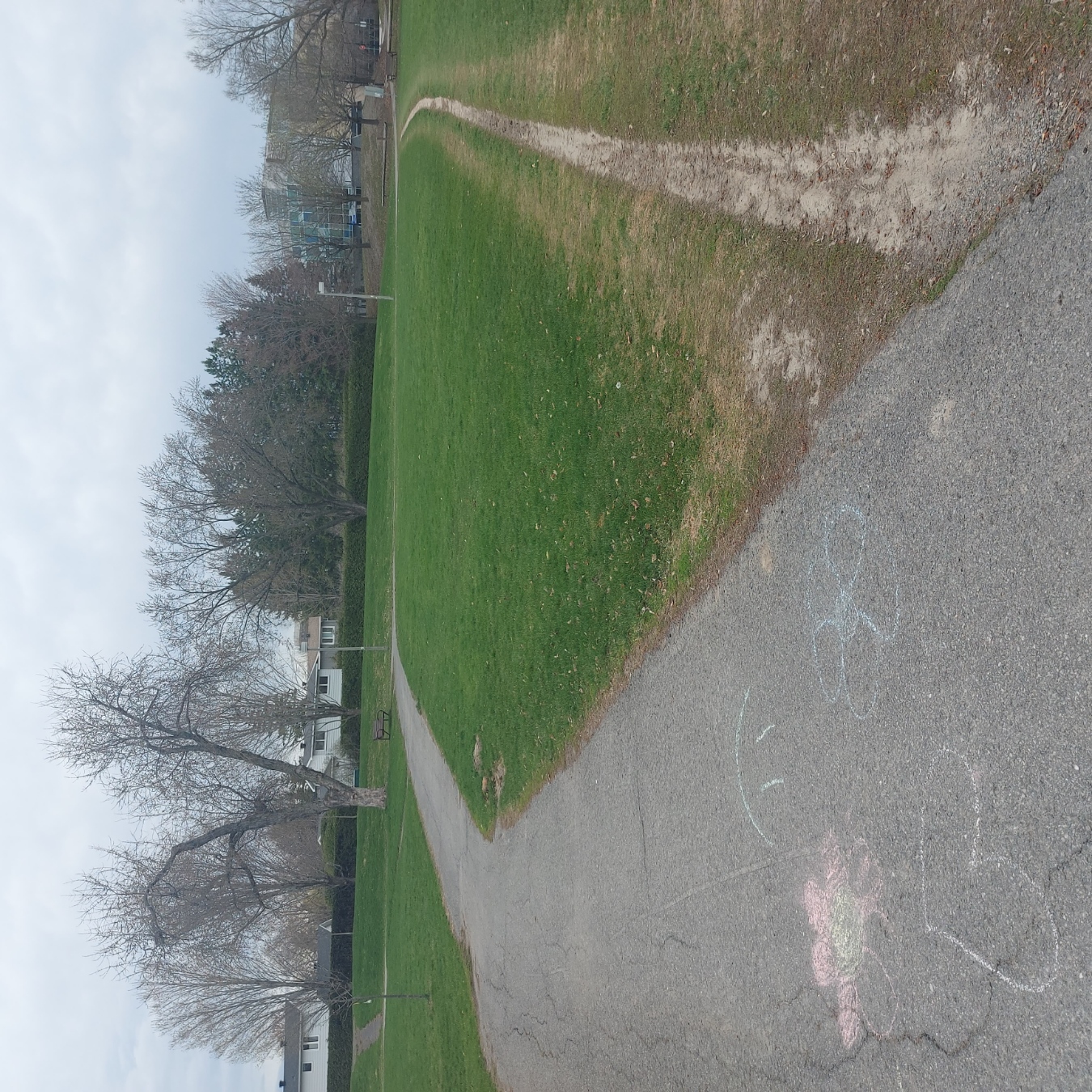
Like the picture above shows, desire paths tend to appear when a structured path takes the long way toward a goal. I always imagine the "official" path to be the two legs of a right triangle. Who can blame people for preferring the hypotenuse?
But desire paths are destructive. They represent our base instinct to minimize effort whenever possible, regardless of how this may affect the environment. In an urban setting like a neighbourhood park, it's no big deal. Just a bit of an eye sore. But in a place where conservation is key, like a national park, I'd say straying from designated paths and trails is pretty bad. Immoral, even.
So, who's to blame for desire paths? The people going off designated paths and literally trampling vegetation to death to save a bit of time? Or the planners, whose inefficient design are the reason why people can't help but beat a better path?
I don't know. Probably a bit of both, depending on the case.
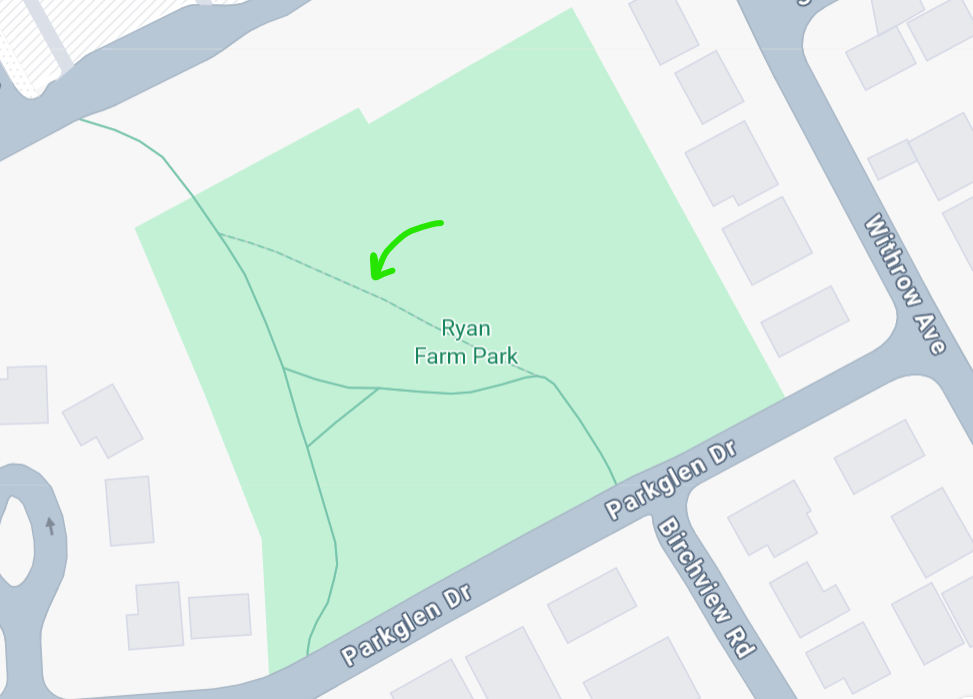
But what I've learned the other day is that well established desire paths show on Google Maps, and I thought that was kinda cool.